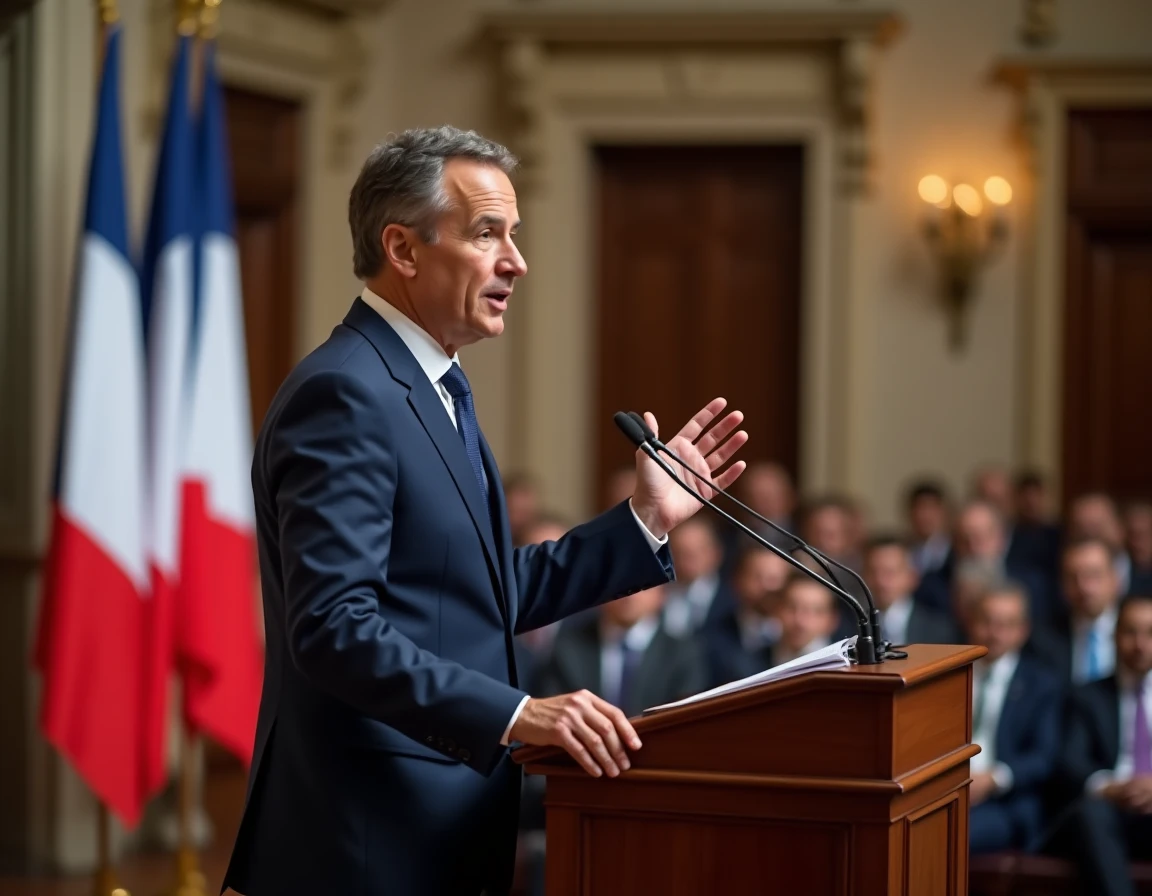
The French political news of the first week of June 2026 is structured around three axes: a death that reactivates ideological fault lines on the right, a presidential diplomatic sequence on the Middle East, and a budget debate focused on defense. Each of these topics produces concrete effects on partisan balances and ongoing electoral strategies.
Chirac Legacy and Recomposition of Parliamentary Right
The death of Bernadette Chirac, which occurred on June 6 at the age of 93, goes beyond the realm of official tribute. Several leaders from the right and center have seized the opportunity to reactivate a specific political narrative: that of a social, pro-European, and moderate right, a direct heir to Chiracism.
This positioning is not trivial. It fits into a context where the parliamentary right seeks to distinguish itself from the National Rally on the values front, less than a year before the next elections. Behind the scenes discussions are focused on possible alliances and on the ability of figures from LR to embody a credible alternative in the face of the rise of the far right.
Emmanuel Macron praised her as a “great lady of heart,” while a condolence register has been opened in front of the Élysée. To follow the evolution of these reactions and their strategic extensions, one can check the news on Sarkostique throughout the week.
Bernadette Chirac remains the only first lady to have held a political mandate in her own name, a fact that fuels the debate on the institutional role of presidential spouses. This unique status enhances the symbolic significance of her passing in the current political landscape.

Foreign Policy and the Middle East: Macron’s Line in Question
The government has issued a call for unity regarding the defense of French interests in the Near and Middle East. This sequence reflects a deliberate presidentialization of foreign policy, where the Élysée concentrates the speech and decision-making on the most sensitive issues.
The stated goal is twofold. It aims to present a coherent French position on the international stage while neutralizing internal divisions. LFI, the RN, and LR have very different visions on this issue, and the government is trying to maintain a common framework beyond partisan lines.
Why This Topic Polarizes the National Assembly So Much
The question of the Middle East touches on several simultaneous political nerves: immigration policy, trade relations, France’s military posture. Each party projects its own priorities onto it.
- La France insoumise insists on international law and the rights of civilian populations, placing it in direct opposition to the government’s line on certain aspects.
- The National Rally links the issue to its security and immigration themes, demanding guarantees on border control.
- The Republicans oscillate between supporting presidential diplomacy and wanting to mark a difference on defense and strategic alliances.
This polarization explains why the government chooses to frame the debate from the perspective of national unity rather than opening a thorough parliamentary discussion.
Defense Budget and Arms Industry: A Deliberate Political Shift
Continuing from the announcements on the Middle East, the government emphasizes the need to strengthen French and European military capabilities. Budget increases dedicated to defense are no longer presented as a constraint but as a genuine economic and strategic lever.
Arms contracts occupy a new place in political discourse. The Minister of the Armed Forces defends them as tools of industrial sovereignty, capable of supporting employment in several regions. This rhetoric marks a break from the traditional discretion on these issues in domestic politics.
Defense and the 2027 Presidential Election: A Campaign Ground
The topic of defense is gradually establishing itself as a differentiation axis for the upcoming presidential election. Potential candidates are beginning to position themselves on the desired level of budgetary effort, on France’s place in the European security architecture, and on the priorities for military equipment.
This shift is fueled by the deterioration of the international context, which makes pacifist or budget-cutting positions more difficult to maintain publicly. Defense is becoming a marker of regal credibility for political figures seeking presidential stature.

Pension Reform and Internal Tensions within the RN
The pension issue is resurfacing, this time as a source of tension within the National Rally. The party’s position on the repeal of the reform, long brandished as a firm commitment, is the subject of internal debates as 2027 approaches.
The problem is as much arithmetic as it is political. Promising a return to retirement at 60 years old involves calculating the cost and identifying funding sources. Several RN officials privately express reservations about the feasibility of this commitment, creating a fault line between the party’s social wing and proponents of a more managerial line.
- The social wing of the RN maintains the promise of repeal as an identity marker in front of the popular electorate.
- Officials close to the parliamentary leadership advocate for a more cautious reformulation, mentioning “adjustment” rather than outright repeal.
- This internal tension provides an angle of attack for RN opponents, who denounce a “double discourse” on pensions.
Pension reform remains the most inflammatory topic for the RN in the run-up to the presidential election. How the party resolves this internal debate will provide a clear indication of its overall electoral strategy.
This week in June 2026 confirms that pre-presidential maneuvers now structure every political sequence, from memorial registers to budgetary arbitrations. The positions taken today on defense, pensions, or foreign policy are already shaping the lines of the 2027 campaign.